
Since the dawn of the internet, web design has been a compromise. We design one interface and hope it works reasonably well for thousands of different users with different needs.
We build complex navigation menus, hoping the user can find what they're looking for. We write broad copy, hoping it resonates with at least a fraction of our audience.
That era is ending. The future is Generative UI.
What is Generative UI?
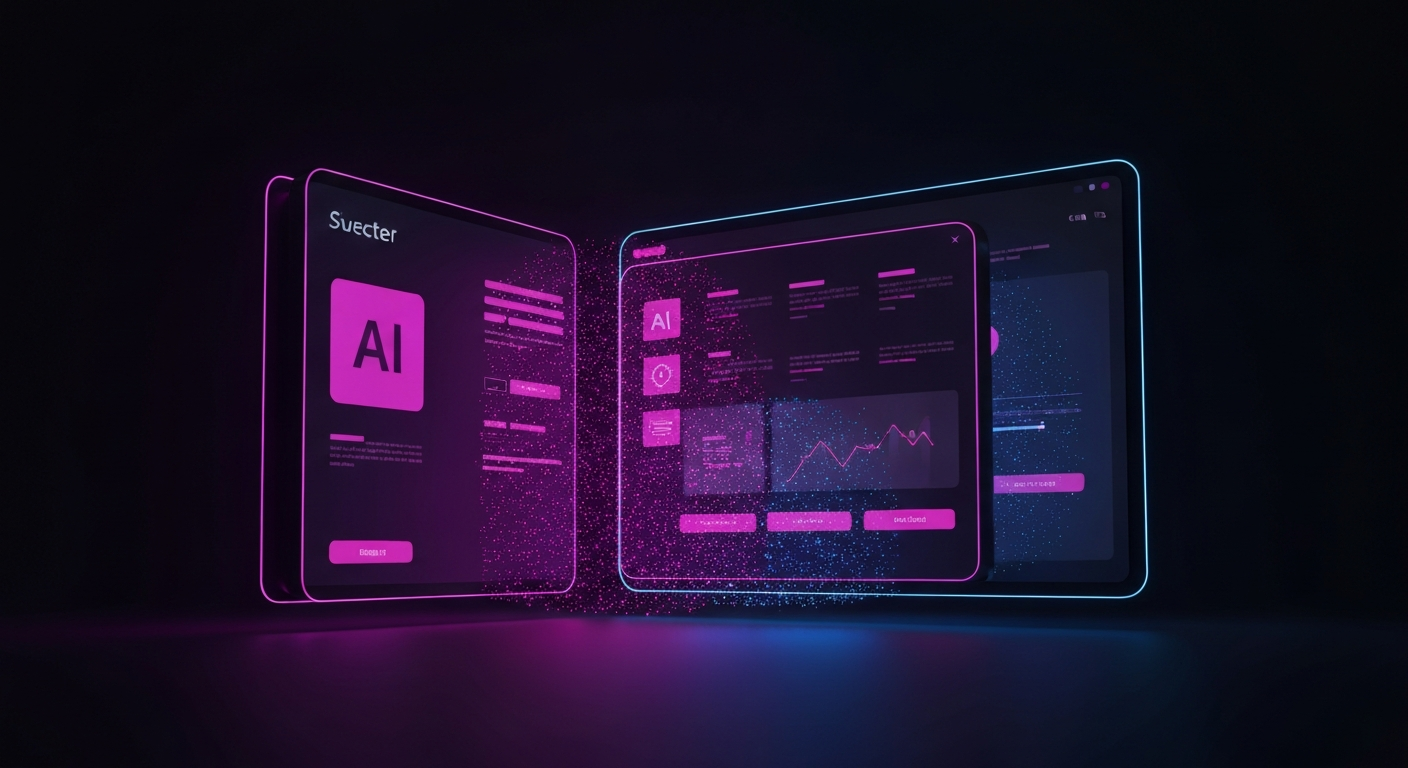
Generative UI is the concept of an interface that builds itself dynamically based on the user's intent, context, and real-time interaction.
Instead of clicking through a rigid navigation structure, the user expresses what they want (often through natural language or behavioral signals), and the application generates the exact components needed to fulfill that request.
Imagine a SaaS pricing page. A user asks the integrated AI assistant, "How much would this cost for a team of 15 people needing API access?"
Instead of just outputting text, the AI generates an interactive, custom pricing table right in the chat interface, highlighting the exact tier they need, with a custom checkout button pre-filled with their requirements.
The Vercel v0 Revolution
Tools like Vercel's v0 and Claude's Artifacts are pioneering this space. They allow developers to stream React components directly from an LLM response.
This means the AI isn't just generating text; it's generating functional, styled, interactive UI elements on the fly.
For marketing, this is the holy grail of personalization.
If a visitor arrives at your site from a specific LinkedIn ad targeting healthcare executives, the site doesn't just show a generic hero section. It dynamically generates a dashboard mockup featuring healthcare data, restructures the feature list to prioritize HIPAA compliance, and alters the CTA to match their enterprise buying cycle.
The Shift in Design Thinking
This requires a massive shift in how we think about web design.
We are no longer designing static pages. We are designing design systems and component libraries that an AI can assemble dynamically.
Designers must focus on creating robust, flexible components—cards, charts, forms, data tables—that look beautiful regardless of how the AI arranges them. We are defining the rules and the aesthetic constraints, but the AI is handling the specific layout for each unique user.
The End of the Funnel
Traditional marketing funnels are linear. Generative UI makes them conversational and dynamic.
The user doesn't have to follow your pre-defined path to conversion. The interface adapts to their path, providing exactly what they need at the exact moment they need it, removing all friction from the buying process.
The websites of tomorrow won't be places you browse. They will be intelligent environments that respond to you.